Sermorelin Dosage: What the Trial Used vs. What Clinics Sell
Sermorelin is the rare peptide on this site that used to be an actual FDA-approved drug: as Geref, it was approved in 1990 (diagnostic use) and 1997 (treatment of pediatric growth hormone deficiency), then discontinued by its manufacturer in 2008 for commercial reasons, not safety. What most searches for "sermorelin dosage" actually land on today is a flat 100-300 mcg nightly protocol sold by anti-aging telehealth clinics, a dose that has never been tested in a trial and that, for most adults, is a fraction of what the one long-term human study behind sermorelin's reputation actually used.
Reviewed by the PepGuard team · Last reviewed Jul 28, 2026
Synthetic 29-amino-acid fragment of human growth-hormone-releasing hormone (GHRH 1-29), amidated at the C-terminus · also sold as Geref, GRF 1-29, GHRH(1-29)-NH2
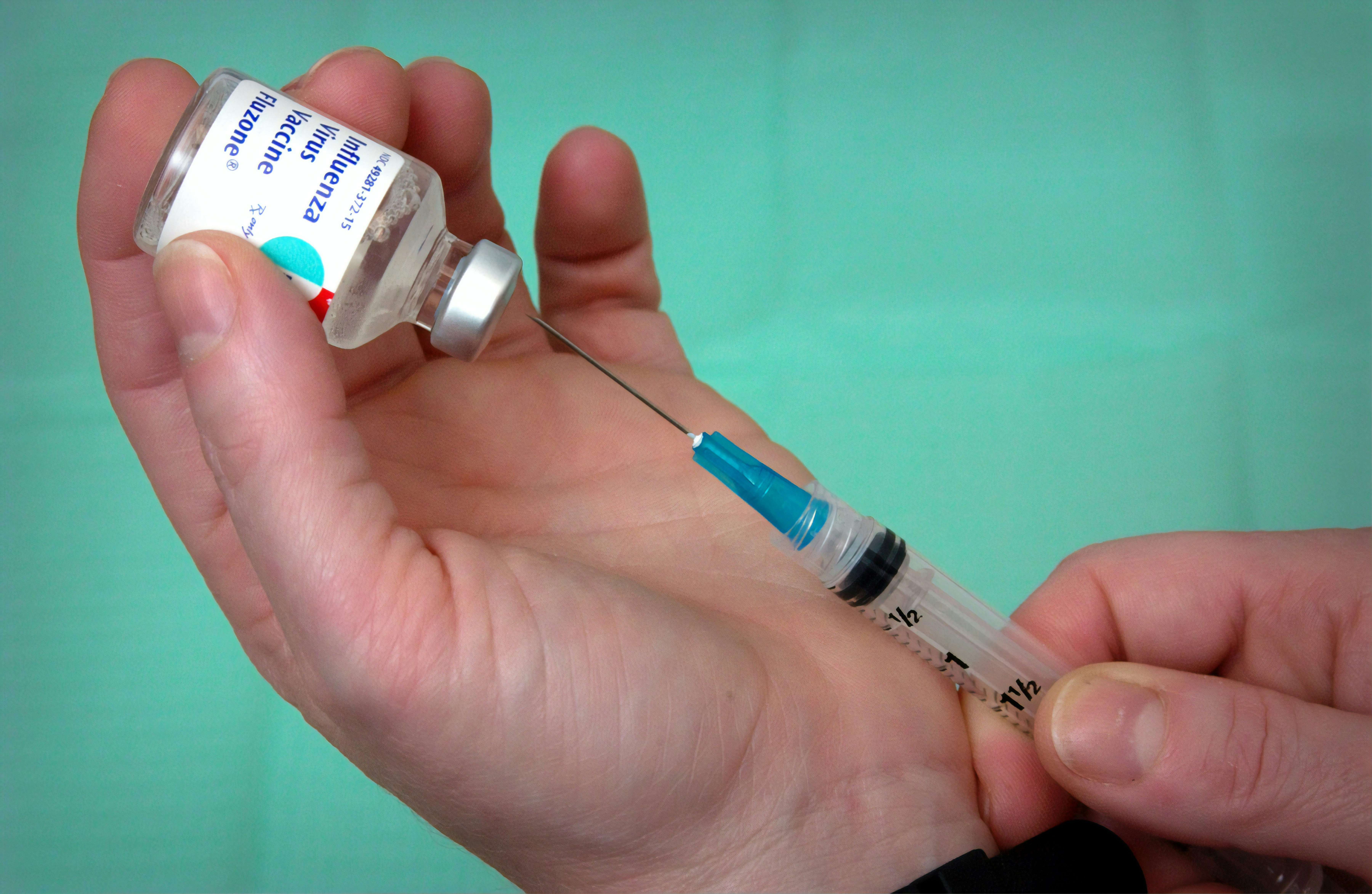 Photo: CDC / Unsplash
Five numbers, four different sources.
Only one of the rows below comes from the trial people actually cite. The rest are pharmacokinetic data, a discontinued pediatric label, or a clinic convention with no trial behind it.
| What's cited | Range |
|---|---|
| Pivotal human trial (Khorram et al. 1997, adults 55-71) | 10 mcg/kg, subcutaneous, nightly (~800 mcg for an 80 kg adult) |
| IV bolus dose-response (Wilton et al. 1993, healthy subjects) | 0.25-2 mcg/kg IV; maximal GH release at 1-2 mcg/kg |
| Intranasal (Wilton et al. 1993) | ~50 mcg/kg; only 3-5% bioavailable vs. IV |
| Original FDA-approved pediatric dose (Geref label, historical) | 0.02-0.04 mg/kg (20-40 mcg/kg), subcutaneous, once daily before bedtime |
| Commonly cited anti-aging/telehealth protocol (flat dose, not trial-derived) | 100-300 mcg, subcutaneous, nightly, regardless of body weight |
The dose that actually produced sermorelin's cited results, real GH and IGF-1 increases in a controlled human trial, is 10 mcg per kg of body weight, injected subcutaneously every night. For an 80 kg adult that's roughly 800 mcg. The flat 100-300 mcg nightly protocol commonly cited by anti-aging telehealth clinics today isn't a scaled-down version of that trial dose; it's a separate, anecdotal convention with no trial behind it, and for most adult body weights it lands at 3 to 8 times below the dose that produced the results those same clinics reference. Separately, the original FDA-approved pediatric label dosed sermorelin at 0.02-0.04 mg/kg (20-40 mcg/kg) subcutaneously before bedtime, for growth hormone deficiency in children, a different population and a different (higher) per-kg dose than either the adult trial or the common clinic protocol.
Do the math on your own weight.
The result everyone cites, higher GH and IGF-1, more lean mass, thicker skin, comes from one real trial: Khorram et al., 1997, sixteen weeks of nightly subcutaneous sermorelin in nineteen adults aged 55 to 71. The dose in that trial was 10 mcg per kilogram of body weight. For an 80 kg adult, that’s roughly 800 mcg a night, not a round number, a weight-based one.
What most telehealth and anti-aging clinics sell today is a flat 100-300 mcg nightly injection, regardless of how much the patient weighs. That’s not a conservative version of the trial dose. For most adult body weights, it’s somewhere between a third and an eighth of it. Nobody has run a trial on the flat, lower dose. The results getting cited to sell it were produced by a dose most buyers are never actually given.
One real adverse event, from one real trial.
| Signal | Frequency | Context |
|---|---|---|
| Injection site reaction (redness, swelling, itching) | commonly reported | The most frequently reported reaction across clinical references for subcutaneous sermorelin. |
| Facial flushing | commonly reported | Attributed to transient vasodilation; typically mild and short-lived. |
| Headache or dizziness during initial adjustment | occasionally reported | Most commonly reported in the first one to two weeks of use. |
| Transient hyperlipidemia | rarely reported | The only adverse event reported in the 16-week Khorram et al. 1997 pivotal trial; resolved by the end of the study. |
| Effects in the general anti-aging/bodybuilding population now buying it | unknown / not studied | The pivotal trial enrolled adults aged 55-71 with age-related GH decline. There is no completed trial of nightly sermorelin in younger, healthy adults using it off-label for anti-aging or muscle gain, which is the population most searches for its dosage are coming from today. |
Previously FDA-approved as Geref, discontinued by its manufacturer in 2008, not revoked for safety. Today it's a compounded substance, not an approved drug.
Geref (sermorelin acetate) was approved by the FDA for diagnostic use on December 28, 1990, and for treatment of idiopathic growth hormone deficiency in children on September 26, 1997. In 2008 the manufacturer, EMD Serono, notified the FDA it was discontinuing Geref and requested withdrawal of its approval; the FDA's own 2013 Federal Register determination states explicitly that the withdrawal was not for reasons of safety or effectiveness. That distinction matters for what's sold today: checked directly against the FDA's current "Bulk Drug Substances Nominated for Use in Compounding Under Section 503A" list (updated May 14, 2026), sermorelin does not appear in Category 1, 2, or 3, unlike almost every other peptide on this site (BPC-157, GHK-Cu, MOTS-c, Semax, and Selank are all caught up in that nomination process). Sermorelin doesn't need a nomination because it already went through real FDA drug approval; compounding pharmacies rely on that prior-approval history under Section 503A instead. That doesn't make every compounded batch equivalent to the approved product: in 2016, Talon Compounding Pharmacy recalled sermorelin and HCG lots after dispensing vials to patients before sterility testing was complete, and the testing later confirmed a sterility failure. That's a real, documented compounding-quality risk, not a theoretical one.
Every claim above, traced back.
Two primary human studies, the FDA’s own withdrawal determination, the current 503A nomination list, a clinical reference, and one documented compounding recall. Click through and check them yourself.
Sermorelin questions, answered.
It was, as Geref, for diagnostic use starting in 1990 and for treating growth hormone deficiency in children starting in 1997. The manufacturer discontinued it in 2008 for commercial reasons, and the FDA's own determination states the withdrawal wasn't about safety or effectiveness. What's sold today under the name sermorelin is compounded, not the approved product, and doesn't carry an active FDA approval of its own.
The pivotal 16-week human trial (Khorram et al., 1997) used 10 mcg per kilogram of body weight, injected subcutaneously every night, in adults aged 55-71. That's roughly 800 mcg for an 80 kg adult. Most anti-aging telehealth clinics today cite a flat 100-300 mcg nightly dose regardless of body weight, a protocol that was never tested in that trial or any other, and that lands well below the trial dose for most adults.
They're related but distinct. All three are GHRH-class secretagogues, but sermorelin is the shortest fragment (GHRH 1-29) with the shortest half-life of the three. Tesamorelin is a modified, FDA-approved 44-amino-acid analog (Egrifta) for a specific HIV-related indication. CJC-1295 carries a Drug Affinity Complex (DAC) modification that extends its half-life to days instead of minutes. None of the three is interchangeable with another at the same dose.
Sermorelin itself has a real approval history and a reasonably well-characterized side-effect profile from clinical use. The risk that's specific to buying it compounded is manufacturing quality, not the molecule: in 2016, Talon Compounding Pharmacy recalled sermorelin and HCG lots after vials were dispensed to patients before sterility testing was complete, and the testing later confirmed a sterility failure. That's a real, documented example of the kind of quality-control risk that exists in the compounding supply chain, not a reason to assume every compounded batch is unsafe.
Keep researching.
This is a preview of the Sermorelin report.
Create your account to check any peptide against the full research base.